
Hand-processed conifer bark mulch — a natural way to keep weeds down and cover garden beds, free of the wood particles typical of sawmill-made mulch.
There are various ways to fight weeds — weeding by hand, herbicides, flame weeding. A more natural and time-saving approach is to cover the soil with various materials, i.e. mulching. Organic mulches, bark mulch included, are always better for plant growth than synthetic materials.
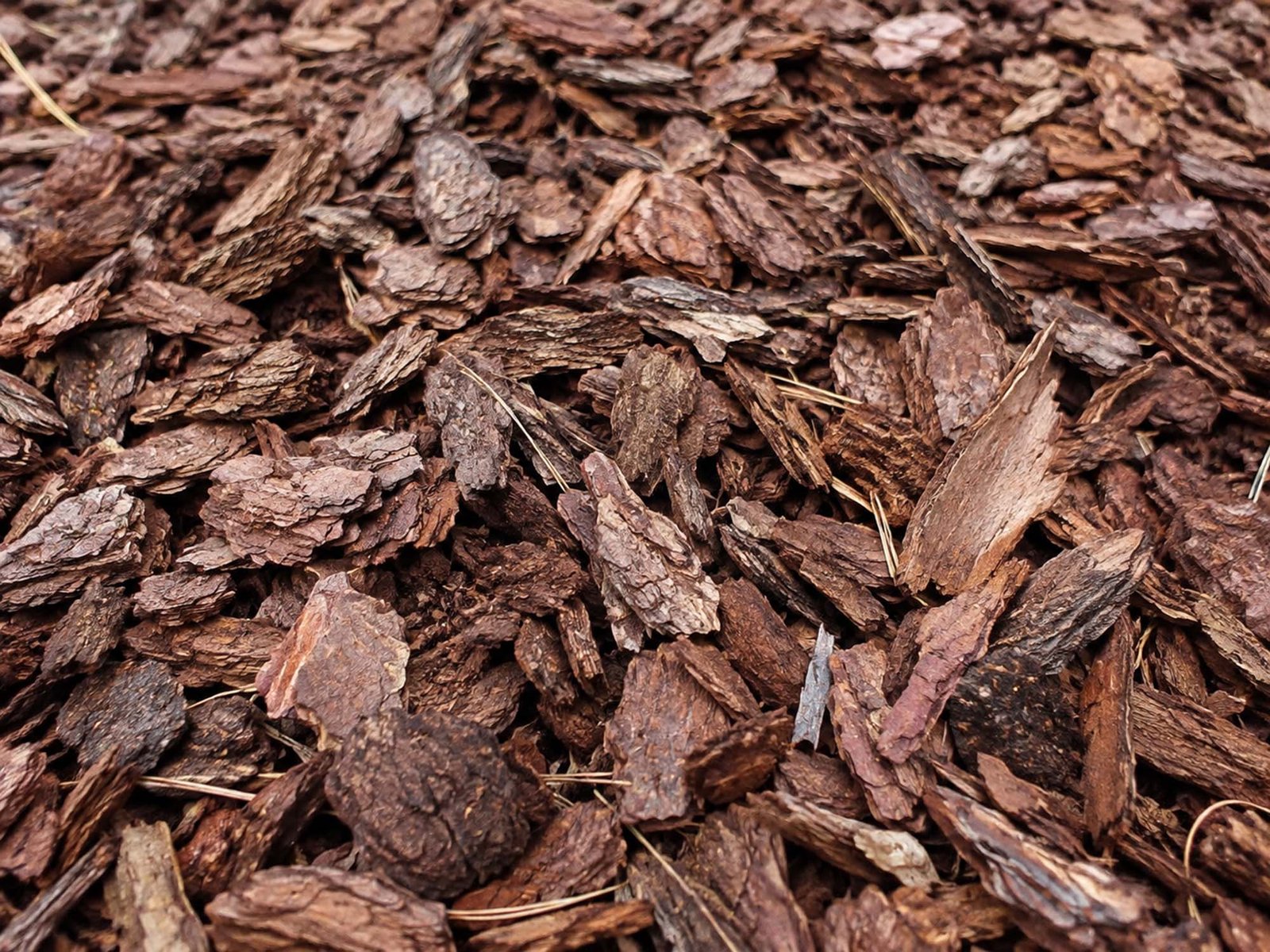
Bark mulch works both as mulch on its own and as a decorative top layer over other mulch. What makes ours special is that, unlike sawmill-produced mulch, it's hand-processed and free of wood particles.
Decorative cover
When used as a decorative layer over other organic or synthetic mulch, a 3–4 cm layer of bark mulch is enough.
Mulching with bark mulch alone
The mulch layer should be 5–7 cm thick, leaving the plants' root collar clear. The layer should be topped up occasionally as the lower layers decompose.
Perennial flower beds
A finer-fraction bark mulch suits these best — a 5 cm layer is enough.
Shrubs and hedges
A coarser-fraction bark mulch suits these best, with a layer at least 7 cm thick.
If you want to slow down how quickly the mulch decomposes, lay a mulch fabric between the soil and the bark layer — since the fabric restricts oxygen movement in the soil, the ground underneath should be carefully prepared first (for example, by adding compost and sand or expanded clay to improve aeration).
Conifer bark mulch makes the soil more acidic.
Ask about quantities and pricing →